
10 Creative Ways to Announce Your Future Baby with AI-Generated Photos
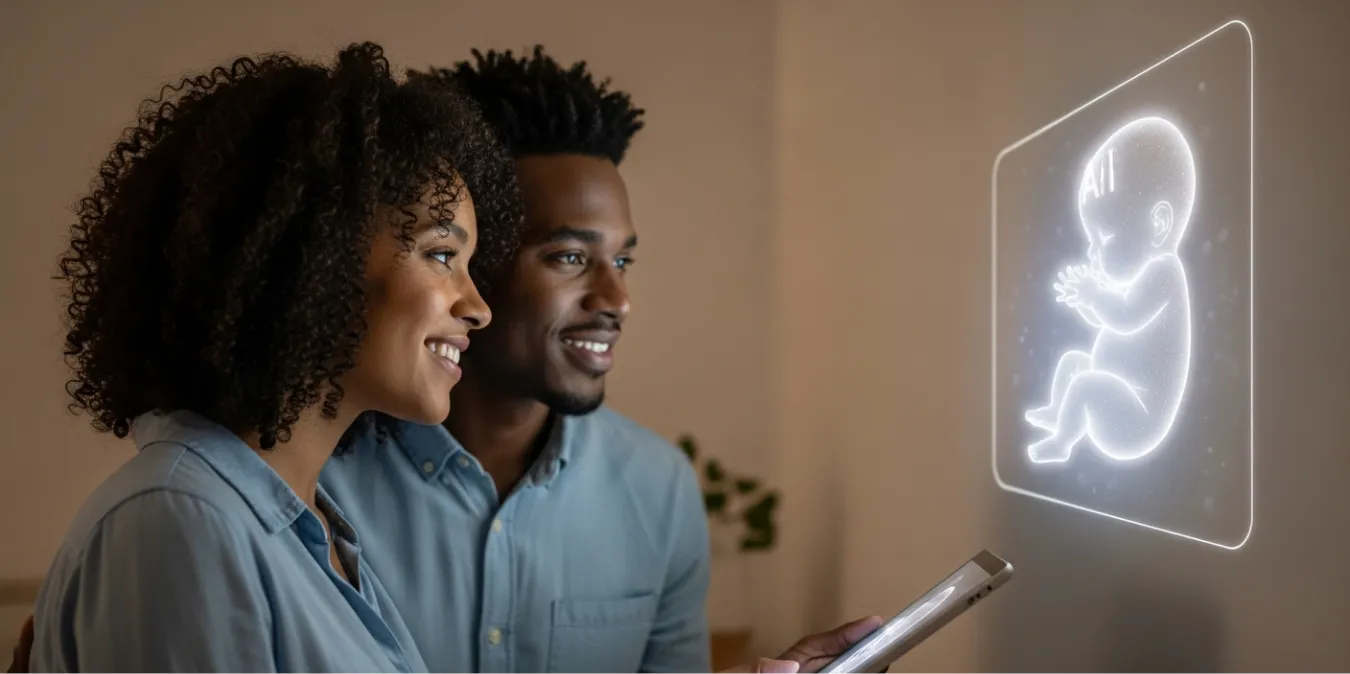 The journey to parenthood is filled with anticipation and joy. Sharing the news of a new baby's arrival is a momentous occasion, often celebrated with unique and memorable announcements. In today's digital age, technology offers exciting new avenues for creativity, and artificial intelligence (AI) is emerging as a fascinating tool to add a personalized, futuristic touch to these announcements. Imagine seeing a glimpse of your future child even before they arrive.
AI-generated photos allow expectant parents to visualize what their baby might look like by blending features from both parents. This innovative approach moves beyond traditional sonograms or simple text announcements. It offers a playful, imaginative way to involve friends and family in your excitement. By leveraging the power of AI, you can create truly unique keepsakes and share your news in a way that reflects your personality and hopes for the future.
Understanding AI for Predicting Baby Features
Exploring fun ways to predict baby features has always captivated expectant parents. From old wives' tales to genetic discussions, the curiosity about a baby's appearance is universal. Now, artificial intelligence offers a novel, albeit playful, method to satisfy this curiosity. BabyGen: AI Baby Generator can generate images that combine the facial characteristics of two individuals, offering a speculative glimpse into what their child might look like.
At its core, this process involves sophisticated algorithms and neural networks. When you upload photos of both parents, the AI doesn't just "mix" them like a simple photo editor. Instead, it analyzes hundreds, sometimes thousands, of data points from each face. This includes features like eye shape, nose structure, lip fullness, and even subtle bone structure. The AI identifies patterns and then uses a generative model to create a new, composite face.
Many of these systems utilize what are known as Generative Adversarial Networks (GANs) or diffusion models. Think of a GAN as two AIs working together: one (the generator) creates images, and the other (the discriminator) tries to tell if the images are real or fake. Through this constant feedback loop, the generator learns to produce incredibly realistic, yet entirely new, faces. Diffusion models work by gradually adding noise to an image and then learning to reverse that process, generating new images from pure noise based on learned patterns.
The "prediction" here is purely for entertainment. These AI-generated images are not scientific forecasts or medical predictions. They are artistic interpretations based on the input data. The AI doesn't understand genetics in the biological sense; it understands visual patterns. Therefore, while the results can be surprisingly convincing and often adorable, they are best enjoyed as a creative and imaginative exercise. It's a delightful way to visualize your future family, offering a unique perspective on fun ways to predict baby features without any scientific claims.
When using these tools, it is important to consider data privacy. Ensure you are using reputable platforms that clearly outline their data handling policies. Your personal photos are sensitive, so understanding how they are stored, processed, and deleted is crucial. Most ethical AI services will process your images temporarily and delete them after generation, ensuring your privacy is maintained.
10 Creative Ways to Announce Your Future Baby with AI-Generated Photos
Integrating AI-generated baby photos into your announcement adds a layer of personalization and wonder. Here are ten creative ideas to make your big reveal truly unforgettable.
1. The "First Look" Digital Reveal
Create a captivating digital announcement that mimics a magazine cover or a movie poster. The centerpiece will be your AI-generated baby photo. This approach allows for wide sharing across social media platforms.
Design a graphic with a catchy headline like "Coming Soon!" or "Our Little Star is on the Way!" Place the AI baby photo prominently. Add a small caption explaining that the image is an AI-generated glimpse of your future child. This method is quick, impactful, and easily shareable, generating immediate excitement among your digital audience.
2. Personalized "Future Family Portrait" Cards
Transform your AI-generated baby photo into a cherished physical keepsake. Design custom announcement cards that feature a "future family portrait." This card can include a picture of you and your partner, alongside the AI-generated image of your baby.
Print these cards and mail them to close friends and family. The tangible nature of a physical card makes the announcement feel more personal and lasting. On the back, you can include details like the due date and a short, heartfelt message about your excitement. This creates a memorable item for loved ones to display.
3. The "Guess Who?" Social Media Poll
Engage your audience with an interactive "Guess Who?" poll on social media. Post a series of images: one of you, one of your partner, and the AI-generated baby photo. Ask your followers to guess which features they think the baby inherited from each parent.
This interactive approach generates buzz and encourages comments and shares. It's a playful way to involve everyone in the anticipation. Reveal the "answer" (the AI-generated photo) after a set period, explaining the fun technology behind it. This builds excitement and engagement around your announcement.
4. "Our Story, Chapter Next" Photo Album
Compile a digital or physical photo album that tells your journey as a couple, culminating in the announcement of your baby. Include photos of significant milestones, then introduce the AI-generated baby photo as "Chapter Next."
This narrative approach makes your announcement deeply personal and emotional. You can title the album "Our Love Story: The Next Chapter" and feature the AI baby photo on the final page, perhaps with a due date. This creates a beautiful progression, showing how your love story is evolving.
5. "Future Nursery" Vision Board with AI Baby
Design a "future nursery" vision board, either digitally or physically, incorporating the AI-generated baby photo. This board can feature color palettes, furniture ideas, and decorative elements. The AI baby photo will be the adorable inhabitant of this imagined space.
This idea is particularly engaging for those who enjoy planning and design. It offers a tangible representation of your dreams for your child's arrival. Sharing this vision board allows friends and family to glimpse not just your baby, but also the loving environment you are preparing.
6. Animated "Baby Reveal" Video
Create a short, animated video that slowly reveals the AI-generated baby photo. Start with abstract shapes or a montage of parent photos, then gradually transition to the AI baby image. Add gentle music and a simple text overlay with your announcement.
Video content is highly engaging and can be shared across various platforms. The gradual reveal builds suspense and excitement. You can use simple video editing software or even online animation tools to bring this idea to life. This dynamic approach makes your announcement truly stand out.
7. "Baby's First Look" Keepsake Box
Assemble a physical keepsake box filled with items representing your hopes and dreams for your baby. Include tiny baby shoes, a small blanket, and a framed print of the AI-generated baby photo. This box can be presented to close family members.
This intimate and personal announcement allows for a hands-on experience. The framed AI photo becomes a central, tangible piece of the announcement. It's a beautiful way to share your news in a meaningful, memorable manner, creating a cherished item for your loved ones.
8. Themed "Future Forecast" Party Invitations
If you're planning a baby shower or gender reveal party, use the AI-generated baby photo on your invitations. Design invitations with a "Future Forecast" or "Glimpse into Tomorrow" theme. The AI baby photo will serve as the adorable face of your future.
This sets a fun and intriguing tone for your event right from the start. Guests will be curious and excited to see the "predicted" baby. It's a creative way to tie your announcement directly into your celebration, making the invitation itself a conversation starter.
9. A "Then and Now" Photo Series
Create a "Then and Now" photo series comparing baby pictures of both parents with the AI-generated baby photo. This highlights the blending of features in a charming way. You can present this as a collage or a slideshow.
This idea is particularly effective for showcasing the genetic connection in a playful manner. It allows friends and family to compare and contrast features, adding an element of interactive fun. The AI baby photo acts as the "now" (or "future now") in this delightful comparison.
10. "Our Little Secret" Puzzle Reveal
Turn your AI-generated baby photo into a custom puzzle. Mail individual puzzle pieces to friends and family, instructing them to assemble it to reveal your big news. This creates an interactive and memorable experience.
This unique approach requires a bit more effort but offers a highly engaging and personal reveal. The collective effort to solve the puzzle builds anticipation and creates a shared experience. Once assembled, the AI baby photo becomes a tangible representation of your exciting news.
Crafting Effective Prompts for AI Baby Photo Generation
The quality of your AI-generated baby photo largely depends on the input photos and the prompts you provide. Think of the AI as an artist following your instructions. Clearer, more specific instructions lead to better results.
Choosing Your Input Photos:
- High Resolution: Use clear, well-lit photos of both parents. Blurry or low-resolution images can lead to less defined features in the output.
- Front-Facing: Photos where both parents are looking directly at the camera work best. This gives the AI a clear view of facial symmetry and features.
- Neutral Expressions: While not strictly necessary, neutral or slight smiles often yield more versatile results. Extreme expressions can sometimes distort features.
- Consistent Lighting: Photos taken in similar lighting conditions can help the AI blend features more smoothly.
Writing Your Prompts: Many AI tools allow for text prompts to guide the generation. While some tools are simpler, others offer advanced customization. Here's how to think about it:
- Specify Desired Traits: If you have a preference, you can prompt for it. For example, "baby with mother's eyes and father's nose." However, remember the AI is interpreting, not guaranteeing.
- Age and Gender (if applicable): You might specify "newborn baby girl" or "toddler boy" to guide the AI's age progression and gender representation.
- Ethnicity/Hair Color: If you want to ensure certain features are represented, you can include descriptors like "baby with dark hair" or "baby with light skin tone." Be mindful and respectful in your descriptions.
- Style: Sometimes you can prompt for a "realistic photo" versus a "cartoon style" if the tool supports it.
First-Hand Experience: Liam and Chloe's Journey
Liam and Chloe, an expectant couple, decided to use an AI tool for their announcement. They started by uploading several high-quality photos of themselves. Their initial AI-generated baby photos were cute but didn't quite capture the blend they imagined. "Some looked more like Liam, others more like Chloe, but not a true mix," Chloe observed.
They experimented with prompts. Instead of just "baby," they tried "baby with a mix of Liam's warm brown eyes and Chloe's distinctive dimples." They also specified "a joyful, smiling baby." After several iterations and slightly adjusting their input photos to ensure consistent lighting, they achieved a result they loved. The final image, a sweet-faced baby with a hint of both their features, became the centerpiece of their "Future Family Portrait" announcement cards, which received rave reviews from their family. This iterative process, refining both inputs and prompts, proved essential for them to get the desired outcome.
Choosing the Right AI Tool and Ethical Considerations
With a growing number of AI image generators available, selecting the right one is crucial. Consider these factors:
- Ease of Use: Is the interface intuitive? Can you upload photos and generate results quickly?
- Quality of Output: Do the generated images look realistic and natural? Look at examples provided by the tool.
- Customization Options: Does it allow for detailed prompts, or is it more of a "one-click" solution?
- Privacy Policy: This is paramount. A reputable tool will have a clear, transparent privacy policy explaining how your photos are used, stored, and deleted. Avoid tools that claim permanent storage or sharing of your personal data without explicit consent.
- Cost: Some tools are free, while others offer subscription models or one-time fees for higher quality or more generations.
What Did or Did Not Work: The Prompt Iteration Test
In an informal test using a popular AI image generation platform, we experimented with input photos and prompts. When simply uploading parent photos without specific instructions, the AI often produced generic baby faces, sometimes leaning heavily towards one parent. For instance, one test with two distinct parent faces yielded a baby image that looked almost identical to the mother's baby photo, rather than a blend.
However, when we added prompts like "baby with father's strong jawline and mother's delicate nose," the results significantly improved. The AI made a noticeable effort to incorporate these specific traits. We also found that specifying "Caucasian baby," "Asian baby," or "African baby" (when appropriate to the parents' heritage) helped the AI generate more culturally resonant features, rather than a default, often ambiguous, appearance. This highlights that while AI is powerful, explicit guidance through prompts is key to achieving desired outcomes and preventing generic or unintended results.
Post-Generation Enhancement and Sharing
Once you have your AI-generated baby photo, you might want to refine it further.
- Basic Photo Editing: Use standard photo editing software (even free apps) to adjust brightness, contrast, and color balance. You can also crop the image to focus on the baby's face.
- Adding Text and Graphics: Integrate your announcement message, due date, or other decorative elements using graphic design tools.
- Branding (Optional): If you have a specific theme for your announcement, ensure the AI photo fits seamlessly into that aesthetic.
When sharing, remember the context. Clearly state that the image is AI-generated for fun. This manages expectations and prevents any misunderstanding. A simple caption like "A little peek into our future, courtesy of AI!" can be perfect.
Managing Expectations and Embracing the Fun
It is crucial to approach AI-generated baby photos with a spirit of fun and creativity. These images are not meant to be accurate predictions. Human genetics are complex, and AI, despite its sophistication, operates on patterns and algorithms, not biological inheritance. The baby you welcome will be unique, with their own distinct mix of features, personality, and charm.
The true value of using AI in this context lies in the novelty and the joy it brings to the announcement process. It's a modern twist on an age-old excitement, offering a delightful way to visualize your future family. Embrace the unexpected, enjoy the creative process, and celebrate the impending arrival of your little one in a truly unique way.
Conclusion
Announcing a new baby is a magical moment, and integrating AI-generated photos offers an innovative and personal touch. From digital reveals to tangible keepsakes, these 10 creative ideas provide a framework for a memorable announcement. By understanding how AI works, choosing the right tools, and crafting effective prompts, you can create a unique glimpse into your family's future. Remember to prioritize privacy, manage expectations, and most importantly, enjoy the journey of celebrating your upcoming arrival with this exciting new technology.
Frequently Asked Questions (FAQ)
Q1: How accurate are AI-generated baby predictions?
AI-generated baby photos are for entertainment and creative purposes only; they are not scientifically accurate predictions of what your baby will actually look like.
Q2: Are there any privacy concerns when using AI tools for baby photos?
Yes, always choose reputable AI tools with clear privacy policies that explain how your photos are used, stored, and deleted, ensuring your personal data is protected.
Q3: Can I influence specific features in the AI-generated baby photo?
Many AI tools allow you to use text prompts to suggest desired features (e.g., "mother's eyes," "father's nose"), though the AI's interpretation may vary.
Q4: What kind of photos work best as input for AI baby generators?
High-resolution, front-facing photos of both parents with neutral expressions and consistent lighting generally yield the best and most realistic results.
Q5: Is it possible to generate images of the baby at different ages?
Some advanced AI tools allow you to specify an age (e.g., "newborn," "toddler") in your prompts, which can influence the generated image's apparent age.